

Yield farmers are always looking for ways to squeeze more rewards from the same capital. One method keeps popping up in airdrop chats and crypto Twitter: looping strategies.
Think of looping as stacking your own money on repeat. You deposit assets, borrow against them, and redeposit what you borrowed to borrow again. Done right, it can multiply your staking yield and rack up airdrop points—without hunting for new tokens every week.
This guide explains what looping is, why it matters for yield farmers and airdrop hunters, and how you can start safely.
Check out our other airdrop farming guides and content
What Is Looping?
Looping is a recursive borrowing strategy. You use an asset as collateral to borrow more capital, then use the borrowed funds to buy or stake the same asset, and repeat.
Simple example:
- Deposit ETH as collateral.
- Borrow USDT.
- Use that USDT to buy more ETH.
- Deposit the new ETH as collateral.
- Borrow again.
Each “loop” increases your total position. You earn rewards on a bigger base while still holding the same initial funds.
Why Farmers Love Looping
Looping shines for two reasons:
- Higher Yield – You collect staking or lending rewards on a larger pile of assets.
- Airdrop Points – Protocols often reward activity and volume. More loops mean more points.
It’s like putting your capital on a treadmill: it works harder every time it goes around.
Core Looping Methods
1. Classic Collateral Loop
- Deposit ETH or BTC as collateral.
- Borrow a stablecoin like USDT.
- Buy more of the collateral asset.
- Deposit again and repeat.
Good for blue-chip assets and simple leverage. Platforms: Aave, Compound, Maker.
2. Liquid Staking Loop
- Stake ETH to get a liquid token like stETH or mETH.
- Use that token as collateral to borrow a stablecoin.
- Buy more ETH and stake again.
You earn staking rewards on each layer. Works well with Lido + Aave or Rocket Pool + Morpho.
3. Stablecoin Yield Loop
- Deposit USDC or DAI to earn interest.
- Borrow another stablecoin.
- Swap back to the first stablecoin and redeposit.
Purely stable exposure while compounding lending APY. Platforms: Aave, Morpho, FraxLend.
4. Cross-Asset Loop
- Deposit ETH and borrow BTC.
- Use BTC as collateral elsewhere to borrow ETH.
- Keep looping while balancing loan-to-value ratios.
Useful for hedging or if borrow rates differ between assets.
5. LP Token Loop
- Provide liquidity, for example ETH/USDC, to get LP tokens.
- Use the LP token as collateral on a lending protocol.
- Borrow a stablecoin and add it back to the pool.
Earns trading fees and farming rewards while levering the position. Platforms: Curve + Convex, Uniswap v3 + Aave.
6. Liquid Restaking Loop
- Stake ETH and receive a liquid staking token.
- Restake it in a protocol like EigenLayer for extra yield.
- Use the restaked token as collateral to borrow and repeat.
Stacks staking rewards and restaking rewards in one flow.
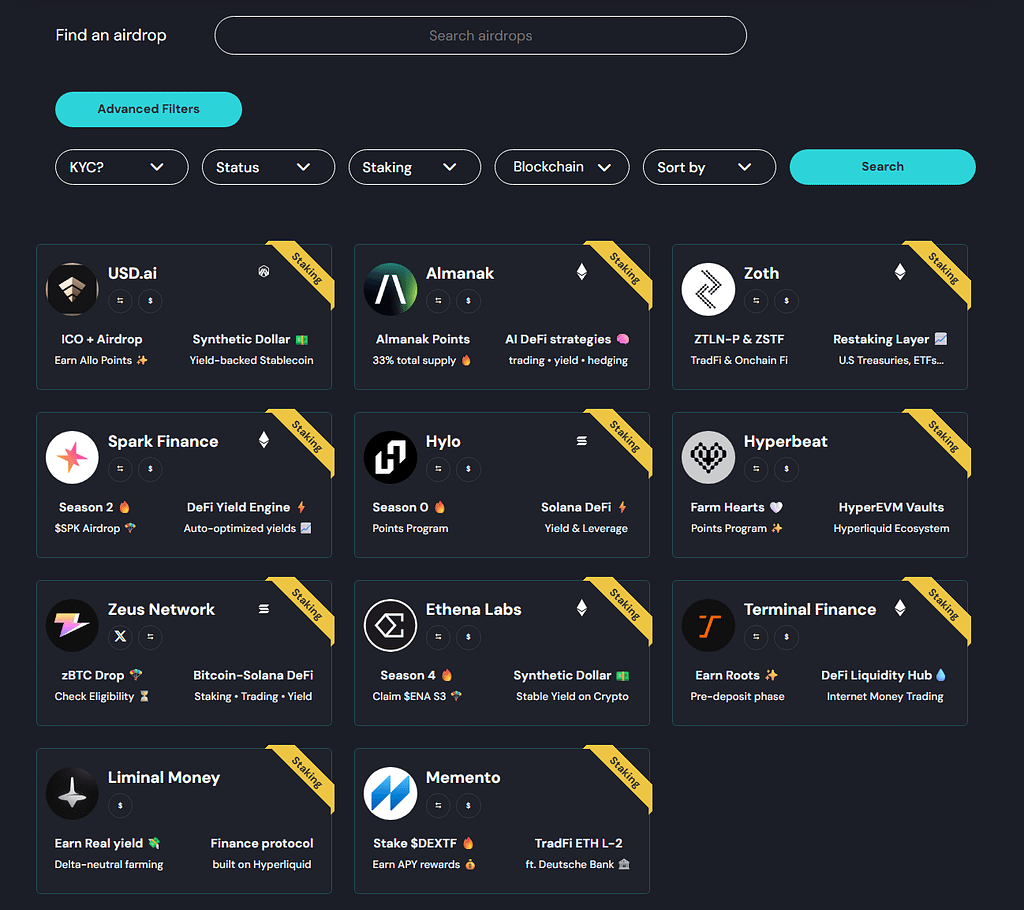
Get it now? Test your new skills with the latest staking airdrops. Go to our browse page, and filter on staking.
Risks to Watch
Even if looping feels like free yield, risk never disappears.
- Liquidation risk: A price drop can trigger auto-liquidation.
- Rate changes: Borrowing rates can spike fast.
- Smart-contract risk: You’re stacking multiple protocols.
- Fee drag: Trading and gas costs reduce gains.
Always track health factors and keep leverage conservative.

- DeFiLlama to compare lending rates.
- Aave and Compound dashboards to monitor collateral ratios.
- Coingecko and Dexscreener for real-time prices.
Good spreadsheets are essential. Most serious loopers live in Excel or Google Sheets to track positions and liquidation levels.
Pick a Chain and Loop!
Now that you’re all educated. Go pick your favourite chain and dive into the potential yields and airdrops and start looping. We got a few recent guides here for you that focus on specific chains. Go check them out for a good starting point.
Personal Note
This is a strategy we always implement when farming. We want to maximize our returns, but keep our risk in check. I spend some days staring at spreadsheets, rebalancing loops, and farming points. It won’t be an instant 100x, but the steady daily income and airdrop rewards add up without stressful red days.
Step-by-Step Starter Plan
- Pick a blue-chip asset like ETH or stETH.
- Check borrow rates on Aave or Compound.
- Decide a safe loan-to-value ratio, usually under 60%.
- Deposit collateral, borrow, buy more, and loop.
- Track everything in a spreadsheet.
- Unwind slowly when you want to exit.
Support Our Work
If you found this helpful, consider signing up on BloFin (Non-KYC) or Bybit using our referral links. Your support keeps this content free and flowing.
Final Thoughts
Looping strategies are a powerful way to multiply yield and farm airdrops. You’re essentially recycling capital to create more of the same asset, earning rewards at each step. Start small, watch collateral ratios, and stay patient.
If you’re ready to make your crypto work harder without chasing every new meme coin, looping might be the next skill to master.
If you enjoyed this blog, you may want to check our other farming guide on funding rate arbitrage.
As always, don’t forget to claim your bonus below on Bybit. See you next time!

Credit: Source link