

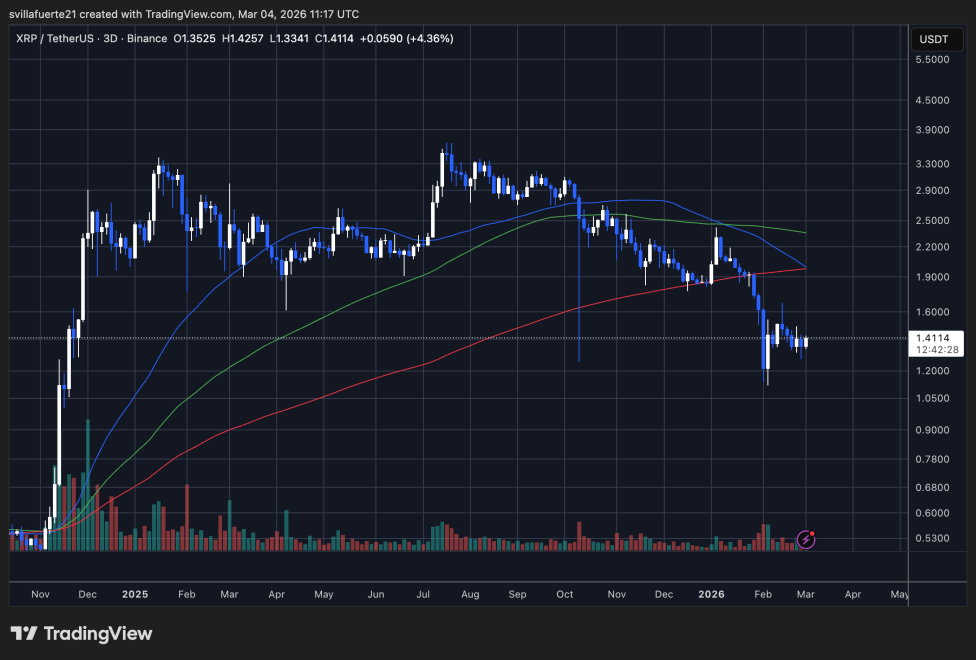
XRP has remained under sustained pressure as it struggles to reclaim the $1.50 level, reflecting a broader slowdown in market participation across several major altcoins. In recent weeks, price action has lacked momentum, with rebounds proving short-lived as liquidity conditions remain fragile and investor activity continues to decline. While macro uncertainty and shifting capital flows have weighed on the wider crypto market, on-chain metrics suggest that XRP is also facing a structural contraction in trading activity.
A recent CryptoQuant report highlights this trend through the XRP Binance 30-Day Liquidity Index, a metric designed to evaluate activity levels on the platform relative to circulating supply. The indicator compares the 30-day turnover rate with total supply, offering a clear view of how actively the asset is being traded within the exchange ecosystem.
According to the latest data, the turnover rate has declined to approximately 7.02 billion XRP over the past month. At the same time, the liquidity index has fallen to around 0.097 — a level that sits near historical lows when compared with previous market peaks.
This combination of falling turnover and weakening liquidity signals a notable structural shift in market dynamics, suggesting that participation has cooled significantly even as the price attempts to stabilize near key support levels.
The report further contextualizes the evolution of XRP liquidity on Binance by highlighting the strong expansion phase observed between 2022 and 2024. During that period, the 30-day liquidity index surged, at times exceeding a reading of 3. This acceleration coincided with a dramatic rise in turnover, with monthly trading volumes approaching 180–240 billion XRP. Such levels reflected an environment of intense activity, where speculative participation and high transaction velocity supported deep liquidity across the platform.

Those conditions began to change during 2025. As the year progressed, the turnover rate started to decline markedly, and the liquidity index slipped below the neutral threshold of 1 before gradually falling toward its current near-zero readings. This contraction signals that trading activity has slowed significantly relative to the available XRP supply held on the exchange.
Structurally, a declining liquidity index does not automatically imply immediate downside pressure on price. Instead, it indicates that the velocity of supply within the platform has decreased. When fewer coins circulate actively in trading flows, the market can enter periods of reduced participation and lower turnover.
However, low-liquidity environments often make price action more sensitive to sudden capital movements. Under these conditions, a resurgence in turnover could rapidly alter XRP’s short-term price dynamics.

Editorial Process for bitcoinist is centered on delivering thoroughly researched, accurate, and unbiased content. We uphold strict sourcing standards, and each page undergoes diligent review by our team of top technology experts and seasoned editors. This process ensures the integrity, relevance, and value of our content for our readers.
Credit: Source link