

Every digital investor eventually faces the challenge of choosing how to safeguard and control their cryptocurrency assets. In a world where virtual currencies are reshaping finance, understanding the critical role of crypto wallets is more than just technical curiosity—it is a necessity for effective asset management and security. This guide breaks down the true function of crypto wallets, compares their types, and highlights the security measures that empower users to take direct command of their digital wealth.
Key Takeaways
| Point | Details |
|---|---|
| Understanding Crypto Wallets | Crypto wallets manage digital credentials for cryptocurrency transactions, storing private and public keys instead of the actual crypto assets. |
| Types of Wallets | There are custodial and non-custodial wallets, as well as hot and cold wallets, each with distinct control levels and security features. |
| Security Importance | The security of private keys is crucial, and users must implement robust protection measures like multi-factor authentication and encryption. |
| Choosing the Right Wallet | Selecting a wallet requires evaluating usage frequency, security needs, and asset diversity to align with personal financial strategies. |
What Crypto Wallets Really Are
A crypto wallet is not a physical container but a sophisticated digital tool designed to manage cryptocurrency access and transactions. Digital credentials for blockchain access represent the core functionality of these technological interfaces, enabling secure financial interactions in the digital currency ecosystem.
At its fundamental level, a crypto wallet performs several critical functions:
- Stores private and public cryptographic keys
- Generates digital signatures for transaction authentication
- Provides a unique public address for receiving cryptocurrency assets
- Enables sending and receiving digital currency
- Manages credential-based blockchain interactions
Unlike traditional wallets that hold physical currency, crypto wallets do not actually store cryptocurrency itself. Instead, they manage the cryptographic credentials that prove ownership and enable transaction authorization on the blockchain network. The private key acts like a digital signature, proving you have the right to transfer or manage specific cryptocurrency assets.
Security is paramount in crypto wallet design. The private key represents the most crucial element – losing this means potentially losing access to all associated cryptocurrency assets. Users must carefully protect these credentials through secure storage methods, hardware wallets, or multi-signature approaches that distribute access risk.
Pro tip: Always maintain multiple secure backup methods for your private keys and consider using hardware wallets for maximum cryptocurrency asset protection.
Main Types of Crypto Wallets Compared
Cryptocurrency wallets are not one-size-fits-all solutions but rather diverse technologies designed to meet different user needs and security requirements. Crypto wallet types vary significantly based on their custody model, connection status, and overall design philosophy.
The primary categorization of crypto wallets involves two fundamental types:
- Custodial Wallets: Managed by third-party services
- Controlled by exchanges or platforms
- Private keys held by the service provider
- Lower personal responsibility
- Non-Custodial Wallets: Fully user-controlled
- Users retain complete private key access
- Maximum personal asset control
- Higher personal security responsibility
Additionally, wallets are classified by their connection to the internet, creating two distinct subcategories:
- Hot Wallets: Online and immediately accessible
- Connected to the internet
- Convenient for frequent transactions
- Lower security compared to offline options
- Cold Wallets: Offline storage solutions
- Disconnected from internet networks
- Significantly higher security
- Ideal for long-term cryptocurrency storage
Beyond these primary classifications, crypto wallets also manifest in multiple physical formats:
- Hardware Wallets: Physical devices storing private keys
- Software Wallets: Digital applications (mobile, desktop, web)
- Paper Wallets: Physical documents with printed cryptographic keys
Security considerations remain paramount when selecting a wallet type. Each format presents unique advantages and potential vulnerabilities, requiring users to carefully evaluate their personal risk tolerance and transaction frequency.
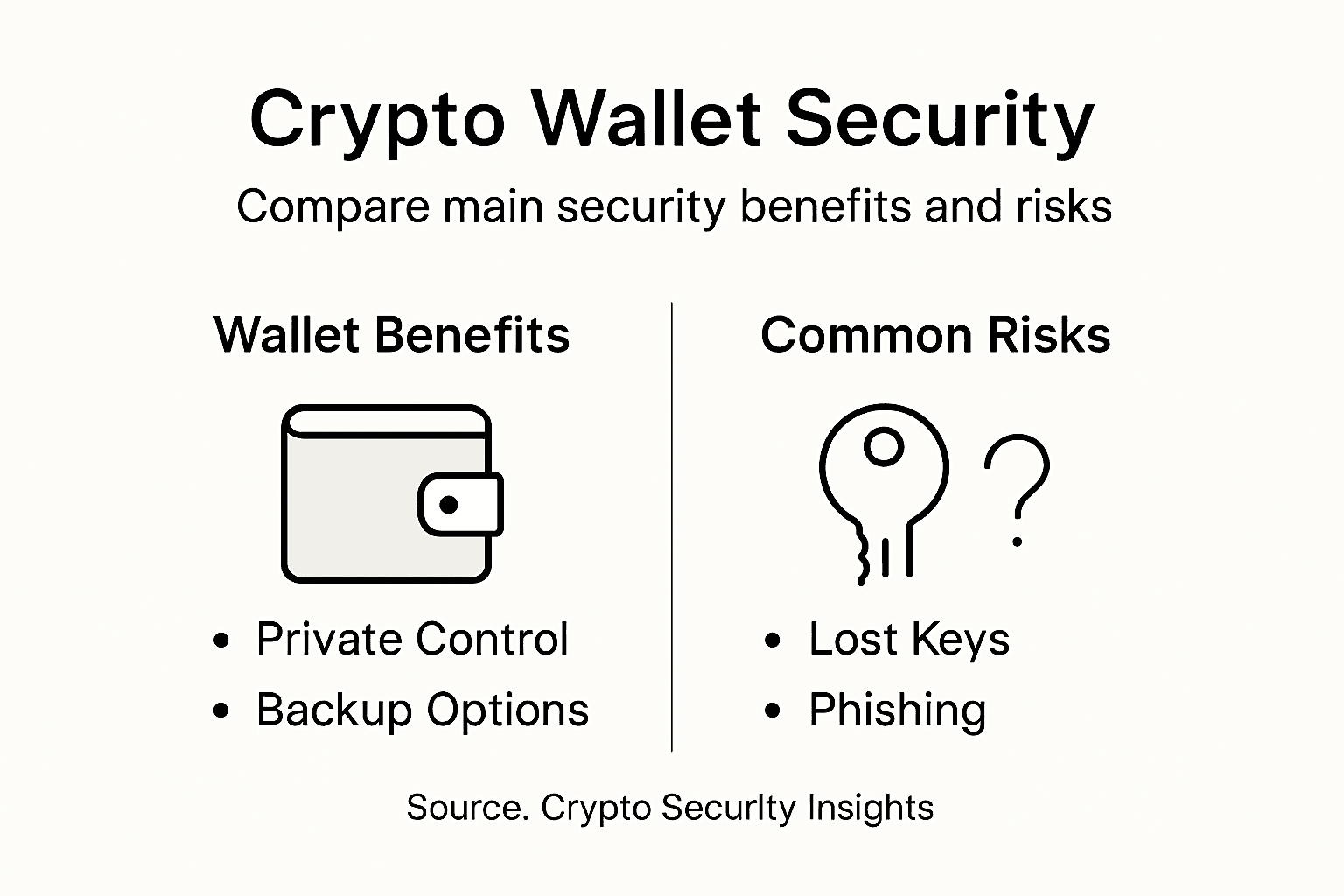
Here’s a concise overview of crypto wallet types and their real-world use cases:
| Wallet Type | Example Use Case | Security Level |
|---|---|---|
| Hardware Wallet | Long-term asset storage | Highest security |
| Software Wallet | Daily transfers and payments | Moderate security |
| Paper Wallet | Cold storage backup | High but fragile |
| Custodial Wallet | Exchange trading | Lowest personal control |
| Non-Custodial | Complete asset management | Maximum user autonomy |
Pro tip: Consider using a combination of hot and cold wallets to balance accessibility and security for your cryptocurrency portfolio.
How Crypto Wallets Empower Asset Control
Cryptocurrency wallets represent more than simple storage tools – they are powerful instruments of digital self-sovereignty. Digital asset administration platforms fundamentally transform how users interact with their financial resources by providing unprecedented levels of personal control and autonomy.
The core mechanism of asset empowerment revolves around several critical capabilities:
- Direct Blockchain Interaction
- Bypass traditional financial intermediaries
- Execute transactions without third-party approval
- Maintain complete transaction transparency
- Cryptographic Key Management
- Full control over private and public keys
- Determine asset movement independently
- Eliminate counterparty risks
Non-custodial wallets particularly amplify user empowerment by removing institutional barriers. Unlike traditional banking systems, these digital wallets enable individuals to become their own financial administrators, with granular control over every aspect of their digital assets.
The technological architecture of crypto wallets introduces several transformative advantages:
- Unrestricted Global Access
- Transaction capabilities across international borders
- No geographical limitations
- Instant cross-border asset movement
- Enhanced Privacy Protections
- Minimize personal financial data exposure
- Reduce surveillance potential
- Create individualized security protocols
Crypto wallets represent a paradigm shift from institutional control to individual financial autonomy.
Security considerations remain paramount. While these platforms offer remarkable control, they simultaneously demand significant user responsibility. Understanding key management, transaction protocols, and potential vulnerabilities becomes crucial for effective asset protection.
Pro tip: Regularly update your wallet’s security settings and maintain multiple backup methods for your cryptographic keys to maximize asset protection and accessibility.
Critical Security Features and Common Risks
Cryptocurrency wallets are constantly battling an evolving landscape of digital threats, making robust security infrastructure critical for asset protection. Digital wallet security challenges encompass a complex array of potential vulnerabilities that require comprehensive defensive strategies.
The most prevalent security risks in crypto wallets include:
- Phishing Attacks
- Fraudulent websites mimicking legitimate platforms
- Social engineering techniques
- Deceptive communication attempting to steal credentials
- Malware Threats
- Keylogging software
- Clipboard hijacking
- Remote access trojans
- Key Compromise Vectors
- Unauthorized private key access
- Weak key generation methods
- Inadequate storage protocols
Essential security features that mitigate these risks involve multiple layers of protection:
- Multi-Factor Authentication
- Biometric verification
- Hardware token requirements
- Complex password protocols
- Encryption Mechanisms
- End-to-end transaction encryption
- Secure key storage techniques
- Advanced cryptographic protection
Robust security in crypto wallets is not a destination, but a continuous journey of adaptation and vigilance.
The stark reality is that wallet security depends equally on technological safeguards and user awareness. Operational security demands constant education, understanding emerging threats, and implementing proactive protective measures.
Pro tip: Implement a comprehensive security strategy that combines hardware wallets, regular software updates, and strict personal security protocols to minimize potential vulnerabilities.
Choosing the Right Wallet for Your Needs
Selecting the ideal cryptocurrency wallet requires a strategic approach that balances personal requirements, security considerations, and practical usage patterns. Wallet selection criteria involve careful evaluation of multiple interconnected factors that impact your digital asset management.
Critical considerations for wallet selection include:
- Usage Frequency
- Trading volume
- Transaction types
- Asset movement patterns
- Security Requirements
- Risk tolerance
- Asset value
- Personal technical expertise
- Asset Diversity
- Number of cryptocurrencies
- Support for specific blockchain networks
- Compatibility with emerging tokens
Wallet types offer distinct advantages based on individual needs:
- Hot Wallets
- Ideal for frequent transactions
- High accessibility
- Lower security threshold
- Cold Wallets
- Maximum security
- Long-term asset storage
- Reduced transaction convenience
The perfect crypto wallet does not exist universally – it depends entirely on your specific financial strategy and risk management approach.
Custody models further complicate the selection process. Users must decide between custodial platforms that manage keys on their behalf and non-custodial solutions offering complete personal control. Each approach presents unique trade-offs between convenience and autonomy.
To assist with wallet selection, here’s a quick comparison of factors to consider:
| Factor | Hot Wallet Choice | Cold Wallet Choice |
|---|---|---|
| Accessibility | Immediate access | Delayed, manual access |
| Security | Lower protection | Robust offline safeguards |
| Ideal for | Active trading | Long-term savings |
| Risk of compromise | Higher risk online | Lower, needs care for loss |
Pro tip: Consider maintaining multiple wallet types to strategically distribute your cryptocurrency assets and minimize potential single-point-of-failure risks.
Secure Your Crypto Journey with Confidence
Understanding the critical security advantages of crypto wallets reveals the importance of choosing the right tools to protect your digital assets. The challenge of managing private keys, defending against phishing attacks, and balancing accessibility with security can feel overwhelming. This article highlights essential concepts like multi-factor authentication, hardware wallets, and the continuous need for vigilant security practices.

Discover how staying informed about the latest crypto security measures empowers you to take full control of your assets while minimizing risks. Visit Crypto Daily for expert insights and breaking news on cryptocurrency trends and protective strategies. Don’t miss out on crucial updates that help you safeguard your holdings today. Explore more at Crypto Daily and become part of a community that bridges knowledge gaps and strengthens your crypto confidence.
Frequently Asked Questions
What is a crypto wallet?
A crypto wallet is a digital tool that allows users to manage their cryptocurrency transactions and access. It stores private and public keys and facilitates sending and receiving digital currencies, providing a unique public address for transactions.
How does a crypto wallet enhance security for my assets?
Crypto wallets enhance security by enabling users to retain complete control over their private keys, which are essential for accessing and managing digital assets. They also employ features like multi-factor authentication and encryption to protect against unauthorized access and data breaches.
What are the main types of crypto wallets available?
The primary types of crypto wallets include custodial wallets, managed by third-party services, and non-custodial wallets, which grant users full control over their private keys. These can be further classified into hot wallets, which are internet-connected, and cold wallets, which are offline storage solutions.
Why is it important to choose the right wallet type for my needs?
Choosing the right wallet type is crucial because it affects your asset accessibility and security. For example, hot wallets offer convenience for frequent transactions but come with lower security, while cold wallets provide high security for long-term storage but are less accessible for immediate transactions.
Recommended
Disclaimer: This article is provided for informational purposes only. It is not offered or intended to be used as legal, tax, investment, financial, or other advice.
Credit: Source link